
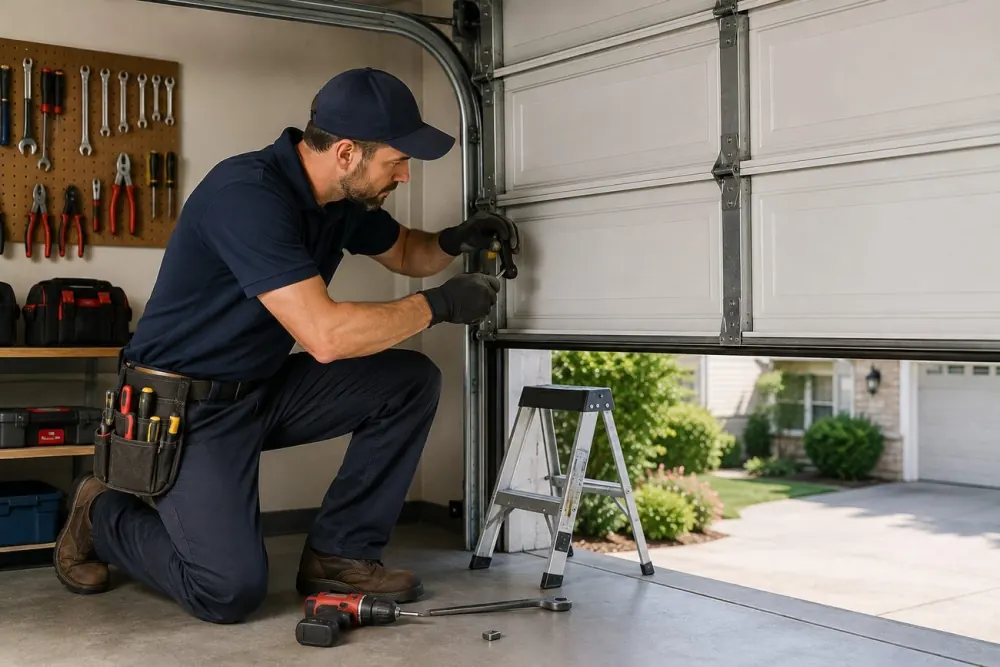
Dented Garage Door Panel: Repair or Swap the Section?
If you're staring at a dented garage door panel, replacement of that single section is often the smartest move — but not always. At Red Oak Garage Door Service and Repair LLC, we've been helping homeowners across Garfield Heights and Greater Cleveland since 2009 decide between repairing a dent, swapping a section, or replacing the whole door. The right call depends on the panel material, the damage, the age of the door, and whether a matching panel still exists. This guide walks you through each factor so you can make a confident decision — and know when to call a pro.
First, Figure Out What Kind of Dent You're Dealing With
Not all dents are equal. A shallow crease from a basketball is very different from a deep buckle caused by a car bumper. Before you decide on garage door panel replacement, take a close look at the damage:
- Cosmetic dent: The panel is pushed in but the door still opens, closes, and seals normally. No cracks, no separation at the seams.
- Structural dent: The panel is creased sharply, the metal is torn, or the section no longer sits flush with its neighbors. This can affect the door's balance and weather seal.
- Dent with tracking problems: The door shudders, binds, or comes off the track. Stop using the opener and call for service — this is a safety issue.
- Dent in a wood or composite door: Wood can sometimes be sanded and refinished; composite panels often can't be repaired invisibly.
Steel doors are the most common in Northeast Ohio, and they're also the most repairable for minor dents. Aluminum is softer and dents more easily. Wood can be patched but rarely looks perfect again. Knowing your material is step one.
Fast local service across Garfield Heights and Greater Cleveland — free written estimate before any work.
Repair vs. Replace: When a Dent Can Be Fixed
For a shallow dent in a steel panel, a technician can sometimes work the metal back out from behind using specialized tools. This is the least expensive option, but it's not always invisible — especially on textured or embossed panels. Paintless dent repair works best on smooth, flat surfaces, which most garage doors are not. If the dent is small and you're not particular about a slight ripple, repair may be all you need.
However, repair has limits. If the metal is stretched or creased, it won't return to its original shape. If the panel is rusted or the paint is cracked, a repair will fail sooner. And if the dent has compromised the panel's structure, repairing it can leave the door unbalanced. In those cases, garage door panel replacement is the better investment. A good rule of thumb: if you can feel a sharp crease with your fingernail, the panel is likely beyond a clean repair.
Section Replacement Cost vs. a Whole New Door
This is where most homeowners want a straight answer. Replacing a single section is almost always cheaper than a full door replacement, but the gap narrows as the door ages or the panel style becomes hard to find. Here's how the math generally works in the Cleveland area:
| Option | Typical Cost Range | Best For |
|---|---|---|
| Dent repair (steel panel) | Often a service-call fee plus labor | Shallow, cosmetic dents on newer doors |
| Single-section replacement | Varies by panel size, material, and availability | One damaged panel on a door under 10–15 years old |
| Whole-door replacement | $1,200–$2,500 (single-car); $1,800–$5,000 (double-car), installed | Multiple damaged panels, outdated style, or no matching panel |
Those whole-door prices are for standard steel doors installed. If your door is older or has a discontinued panel, a section swap may not be possible at any price — and that's when a full replacement starts to make sense. We always quote the section swap first if it's viable, because it saves you money and keeps the rest of your door out of the landfill. You can request a free quote through our quote request form to get a specific number for your door.
Matching Older Panels: What to Check Before You Commit
Garage door panel replacement only works if the new section matches the old one in three ways: profile, color, and texture. Manufacturers change designs frequently, and a panel that was standard 12 years ago may be discontinued today. Before you get your hopes up, gather this information:
- Find the manufacturer's label. It's usually a sticker on the inside of the door or on the bottom section. Write down the model number and serial number.
- Measure the panel. Section width and height matter — a half-inch difference will show.
- Note the profile. Raised panel, carriage house, flush, long panel, short panel — each has a distinct look.
- Check the color and texture. Even if the profile matches, a new batch of paint can be a shade off. Fading from sun exposure makes this trickier.
If you can't find the label, a technician can often identify the door by sight. We keep contacts with major suppliers and can check availability quickly. But be prepared: if the door is more than 15–20 years old, the odds of an exact match drop significantly.
What to Do When No Matching Panel Exists
This is the scenario homeowners dread, but it's common. When a panel is discontinued and no aftermarket match exists, you have three realistic options:
- Replace the damaged section with a close match. If the difference is subtle, a new panel in a similar profile and color may be acceptable — especially on a side or bottom section. But mismatches are usually visible, and they can hurt resale value.
- Replace all sections on the same side. Some manufacturers sell panels in sets. If you can't match one, you might replace the top four sections or the bottom four to create a uniform look. This costs more than a single panel but less than a full door.
- Replace the whole door. When no match is possible and a partial replacement would look odd, a new door is the cleanest solution. It also gives you a chance to upgrade insulation, safety features, and curb appeal. Our garage door replacement service covers removal and installation, and every installation carries a 5-year workmanship warranty.
If you're leaning toward a full replacement, browse our gallery of recent work to see styles that fit Cleveland-area homes.
Safety First: When to Stop Using the Door
A dented panel isn't just an eyesore — it can be a safety hazard. If the dent has pushed the panel out of alignment, the door may bind, strain the opener, or come off the track. A door that's off-balance can also cause the torsion spring or cables to fail suddenly. If you notice any of the following, stop using the door and call for service:
- The door shakes or shudders when opening or closing
- The gap between sections is uneven
- You hear a loud bang or the door feels suddenly heavy
- The panel is cracked or separated from its frame
Our garage door repair team can assess the damage and tell you whether a repair or section replacement is safe. For doors that are stuck open or off-track, our 24/7 emergency repair line is available around the clock.
Why Local Experience Matters for Panel Matching
Big-box stores and national chains can replace a door, but matching an existing panel takes local knowledge and supplier relationships. Red Oak is family-owned and based in Garfield Heights, and we've worked on thousands of doors across Cuyahoga County since 2009. We know which manufacturers are common in older Cleveland neighborhoods, which panel profiles are still available, and which ones are gone for good. That saves you time and prevents ordering the wrong part.
We're licensed and insured, and we hold a 4.9-star average from 127+ local reviews. Whether you need a quick dent repair or a full garage door panel replacement, we'll give you an honest recommendation — not a sales pitch. Call us at (216) 395-1738 to schedule a prompt assessment, or email info@redoakgaragedoor.com with photos of the damage. We serve homeowners throughout Greater Cleveland, including Garfield Heights, Maple Heights, Bedford, Parma, Cleveland Heights, and surrounding towns.
FAQ
Can a dented garage door panel be repaired instead of replaced?
Sometimes. Shallow dents in steel panels can often be worked out from behind, but creased or stretched metal won't return to its original shape. If the panel is structurally compromised or the paint is cracked, replacement is usually the better long-term fix.
How much does garage door panel replacement cost compared to a new door?
A single-section replacement is almost always less expensive than a full door. For reference, a new single-car steel door installed runs $1,200–$2,500, and a double-car door runs $1,800–$5,000. We quote section swaps individually based on panel size, material, and availability.
What if my garage door panel is discontinued?
If no exact match exists, you have options: use a close match if the difference is acceptable, replace all sections on the same side for a uniform look, or replace the whole door. A technician can check supplier inventories and advise which route makes sense for your door's age and condition.
How do I find the model number of my garage door?
Look for a manufacturer's label on the inside of the door, usually on the bottom section or near the hinges. It lists the model and serial number. If the label is missing, a technician can often identify the door by its profile and hardware.
Is it safe to use a garage door with a dented panel?
If the door opens and closes smoothly and the dent is purely cosmetic, it's generally safe. But if the door shudders, binds, or the panel is cracked or separated, stop using it and call for service — an off-balance door can damage the opener or cause a spring failure.